

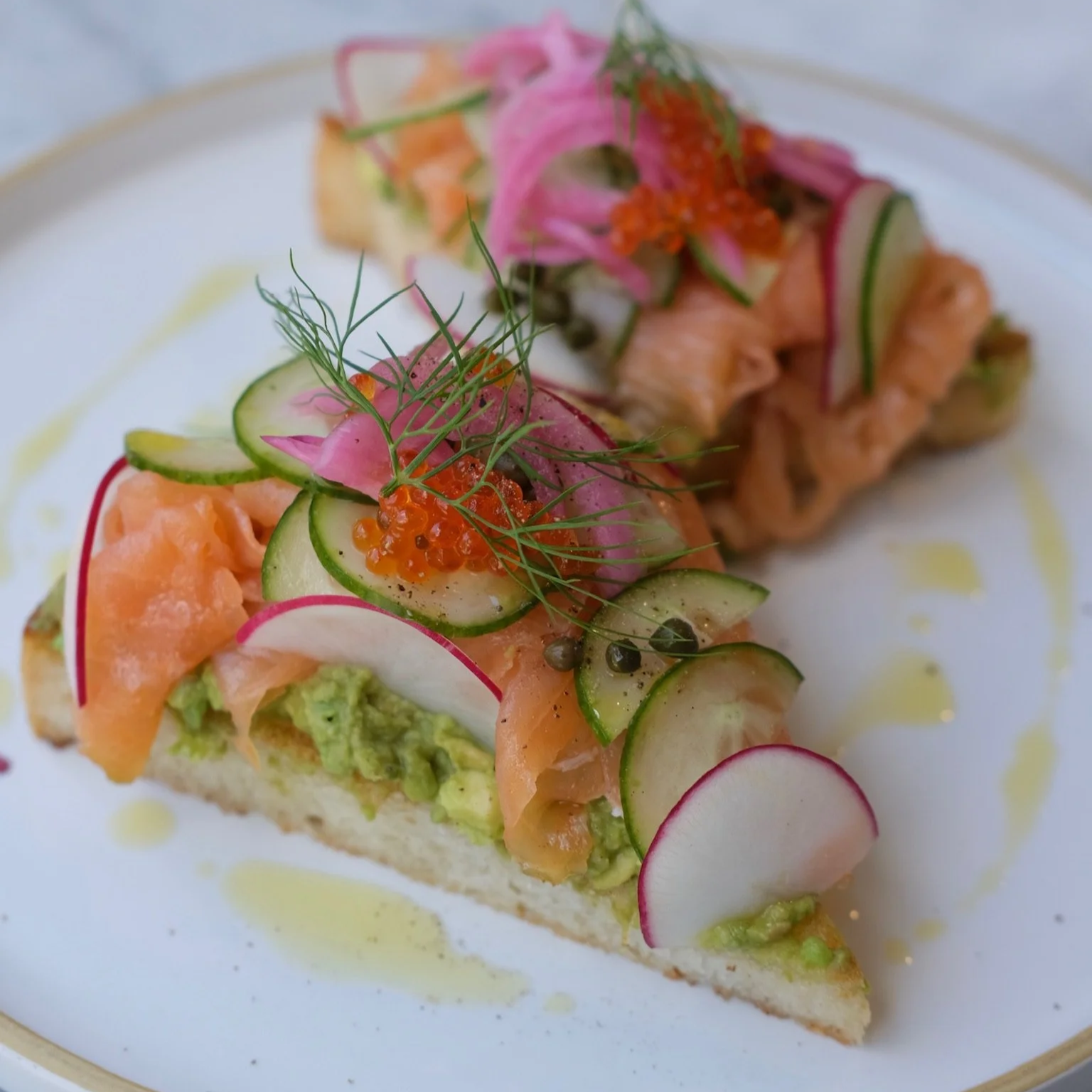
Stockton Market Gluten Free Bread seen on the Jenks toast
"It doesn't even taste gluten-free." That's what customers say when they first try our gluten-free bread, surprised to find it bears no resemblance to the cardboard-like substitutes they've come to expect. I sat down with Head Bread Baker Chef Matthew Sivulich to find out what makes it different.
The Secret: Treat It Like Real Bread
"I think it's how we bake it," Matthew explains. "We use simple ingredients - really good olive oil, salt, and a mixture of gluten-free products. And then we simply treat it like normal bread. We'll let it proof for about five hours, then we'll steam it in a deck oven and score it."
The foundation is Italian flour, but here's the surprising part: it contains vital wheat protein - a gluten derivative that's been extracted from wheat flour. It's not standard gluten, which allows it to carry a gluten-free label and makes it suitable for many gluten-intolerant individuals, though not those with celiac disease.
Matthew's philosophy is simple: "High-quality ingredients, and then you kind of mess with them as little as possible and let them shine through."
An Important Caveat
Our gluten-free bread isn't made in a dedicated gluten-free kitchen, so we can't guarantee it's 100% gluten-free. Similar to not being able to guarantee honey is organic. There is always potential for cross contact. We have gluten in our air. This is crucial information for customers with severe allergies or celiac disease to know. Our gluten-free products are better suited for people with an intolerance or prefer to keep a gluten free diet. Not someone living with celiac disease.
The Evolution of Gluten-Free
For Chef Matthew, who's been baking professionally for 20 years, the transformation has been remarkable. "There was no gluten-free wheat protein when I was in school. We were still adding sparkling water to get as much volume as possible," he recalls. "Now, with the addition of sorghum gum and tapioca and xanthan gum, all these different things—you can make a plain lean dough or add eggs and make a brioche style. It's like a whole new world for baking."
Looking ahead, Chef Matthew is excited about developing gluten-free baguettes and experimenting with traditional ingredients like yucca powder from Brazilian cheese bread. He's also interested in long-fermented breads using local wheat, where "yeast acts as a pre-digestive for the wheat itself, which is way easier on the stomach" for the gluten-intolerant.
Why the Gluten-Free Boom?
When I ask why gluten-free has skyrocketed in popularity, Chef Matthew points to changes in wheat production over the past century. Industrial milling processes that strip out bran and germ have removed many nutrients from flour. Meanwhile, modern wheat itself has been transformed through selective breeding - from 14 chromosomes in ancient einkorn to 42 chromosomes in today's common bread wheat, bred for drought and disease resistance.
"When that product hits our stomachs, the body doesn't know what it is," Chef Matthew explains. "It's almost like a mutant getting into our body so our bodies, certain people can react to it and attack the wheat."
This explains why many people report feeling fine eating bread in France. When Chef Matthew worked with French bakers, he was amazed that "with every delivery of flour, the bakers would receive a spec sheet - where in France it was grown, who grew it, which variety, and the specific protein content for that batch." That level of traceability and simpler wheat varieties make a difference.
As Chef Matthew continues experimenting with ancient grains, long fermentation, and traditional techniques, one thing is clear: gluten-free bread has come a long way from the dense, crumbly loaves of the past. And if his track record is any indication, the best is yet to come.
How to Get Your Hands on It
On our menu, you'll see "GFO" listed for items that are Gluten Free Optional - that means you can skip the bread entirely or substitute our gluten-free option. You also have the opportunity to buy a whole loaf. These loaves are sizable, so we recommend slicing the entire loaf and freezing the slices to enjoy as needed. That way, you can toast a slice whenever the craving hits without worrying about the bread going stale.
Whether you're gluten-intolerant, avoiding gluten by choice, or just curious about what gluten-free bread can be, stop by and taste the difference for yourself. Just remember - if you have celiac disease, this isn't the bread for you due to potential cross-contact in our kitchen. But if you've been settling for cardboard, we think you'll be pleasantly surprised.